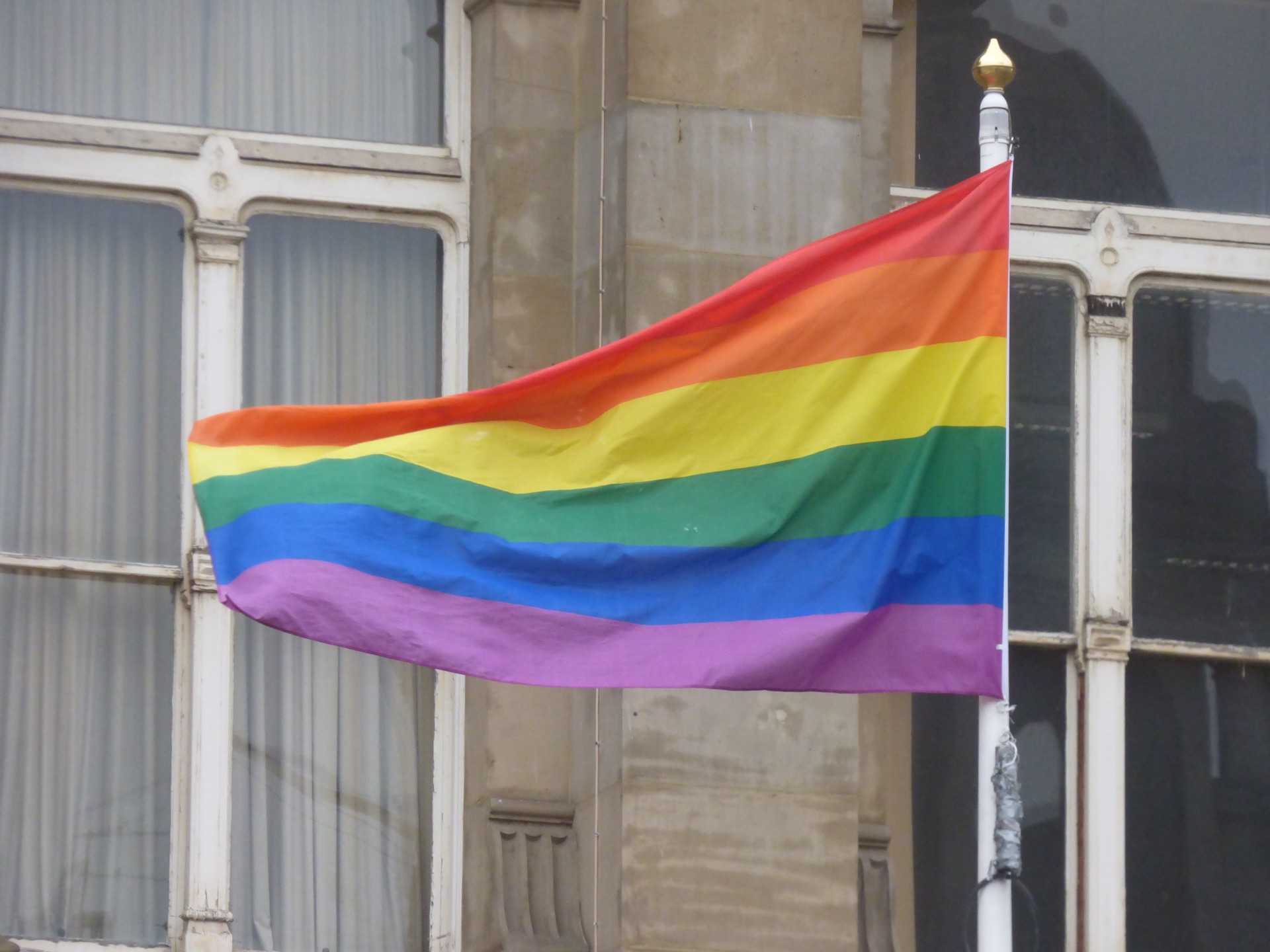
Photo: Elliott Brown / Wikimedia · CC BY-SA 2.0
Birmingham Got There First
Manchester has Canal Street. Brighton wears the crown. But the UK's first LGBTQ+ community centre opened in Birmingham — and that's only where the story starts.
The case in four dates
The Nightingale opens — the year sex between men is partly decriminalised. Still trading today.
Birmingham holds a Pride weekend — rally, leaflets, balloons in Cannon Hill Park. Years before most of Britain.
UK's first LGBTQ+ community centre opens — built by volunteers because no council would fund it.
Angels opens with plate-glass windows onto Hurst Street. The scene steps out of the shadows.
Ask anyone in the country to name a gay city and you'll get two answers. Manchester, with Canal Street and the long shadow of Queer as Folk. Brighton, crowned the UK's gay capital so many times the title's practically laminated. Birmingham rarely makes the list.
It should. And not as a runner-up.
The first LGBTQ+ community centre in the United Kingdom opened in Birmingham. December 1976 — a building on Bordesley Street in Digbeth, with a coffee bar, a library, meeting rooms and a home for Gay Switchboard, all of it built by volunteers on donations because no council would fund it. Other cities opened theirs years later. Birmingham was first, by the better part of a decade.
That's not a fluke. It's a pattern.
The Nightingale Club opened its doors in 1967 — the very year sex between men was partly decriminalised — and has been running, in one form or another, ever since: one of the longest-lived gay venues in the country. By the early 1970s Birmingham had one of the biggest Gay Liberation Front groups in the UK. In July 1972 it held a Pride weekend — a rally in Cannon Hill Park, leaflets and balloons and bagfuls of oranges pressed into the hands of passers-by — years before Pride was a fixture in most British cities.
None of this is on the tourist trail. There's no television drama that made Hurst Street famous. And maybe that's the most Birmingham thing about it: the city built the institutions, did the organising, opened the doors first — then quietly got on with it while other cities got the documentaries.
The Gay Village grew out of exactly that. From the warehouse streets where queer venues clustered because the rent was cheap and the city wasn't watching, to the Village taking proper shape in the 1990s, to 1997 — Angels throwing plate-glass windows straight onto the street, the scene stepping into full view. Today Birmingham Pride is one of the biggest in the country, and from 2027 it's set to return to its roots as a free, community celebration.
A city that got there first. It's about time it was counted.
Look at Birmingham the way an investor would
It's the youngest major city in Europe — nearly four in ten residents are under 25, with a median age of 34 against a national 40. It's the UK's largest city outside London, home to five universities and more than 73,000 students. Young, growing, and staying.
The 2021 Census — the first in history to ask — counted 26,804 people in Birmingham who identify as LGB+, and 7,826 whose gender isn't the one they were registered with at birth. That ranks Birmingham among the largest LGBTQ+ communities of any city in the country. And those are only the people who ticked a box on a government form; the real number is bigger, and younger.
Then there's the part that's Birmingham's alone. It's a majority-minority city: 51.4% of its people are of Black, Asian or minority-ethnic heritage — more than any major city in England or Wales outside London. It's what social scientists call a "super-diverse" city, and the West Midlands around it is one of Britain's great cultural melting pots, with Birmingham at its epicentre. Queer Birmingham isn't one kind of person — it's Black and South Asian and mixed-heritage and white, student and working-class and everything between, queerness woven through every community in a city built from all of them. There is no scene anywhere in the country quite like it.
And there's the scene itself. Birmingham has its own form of drag — bastard drag, comic and unpolished, in the bawdy tradition Lily Savage came up through at The Nightingale in the 80s and 90s. It's a regional style most cities don't have. The city's drag scene has also put three queens on Drag Race UK — Sum Ting Wong, Kitty Scott-Claus and Black Peppa. A city's own tradition, and its talent on the national stage.
Put the history beside the numbers and you don't have a city asking for a seat at the table. You have one that's already earned it.
So, let's say it plainly. Birmingham's queer scene is not a tribute act and not a runner-up. It is one of the oldest and most quietly pioneering LGBTQ+ communities in the country — and it has spent decades being underestimated, sometimes, if we're honest, by Birmingham itself.
We're done with that. This is a city that got there first. It's about time it was counted.
Yes babs. A place at the table — and we're not asking.